




 How Samka Keranovic Brings Leadership Experience to Desert Roots Wellness
Home»GlobalTrends»$1.8 Billion AI Biology Initiative Brings Technology Companies and U.S…
$1.8 Billion AI Biology Initiative Brings Technology Companies and U.S. Research Agencies Together
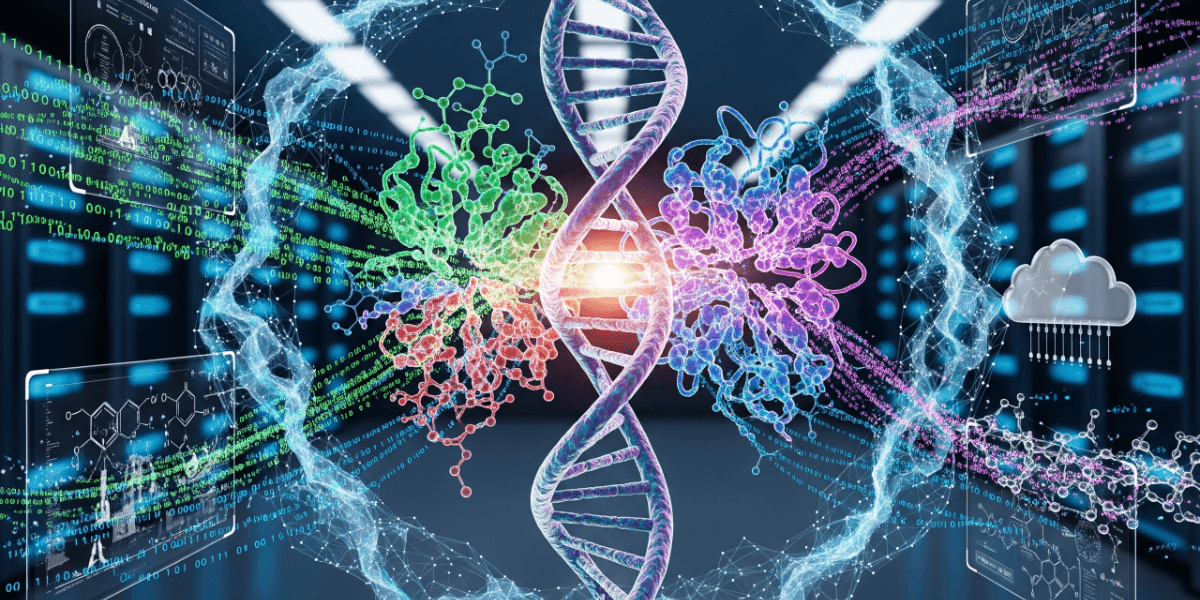
A cross-sector initiative aims to build biological datasets that could help artificial intelligence models predict cellular behavior and support disease research.
A new $1.8 billion international initiative announced on October 7 brought technology companies, U.S. research agencies and the nonprofit Biohub together to develop large-scale biological datasets for artificial intelligence. The effort aims to improve researchers' ability to model how cells respond to different conditions, creating a potential foundation for more predictive approaches to biomedical research.
The collaboration involves Biohub, the U.S. Department of Energy, the National Institutes of Health and private-sector partners, including Google DeepMind, Meta and Isomorphic Labs. According to Biohub and the Department of Energy, the initiative combines funding, computing resources, scientific data and measurement technologies to support the development of AI systems capable of modeling biological processes.
A Strategic Investment in Scientific Infrastructure
The initiative addresses a central challenge in applying AI to biology: sophisticated models require extensive, consistent and carefully generated data. While AI systems have advanced rapidly in language processing and other computational fields, biological systems are more complicated because cells respond to numerous interacting variables.
The project seeks to generate datasets that capture cellular responses under different conditions. Researchers could use these resources to train models that estimate how biological systems might behave when exposed to particular interventions.
The investment is significant not simply because of its size, but because it targets the underlying infrastructure needed to advance AI-driven research. Computing power alone cannot produce reliable scientific predictions if the models lack sufficiently detailed and representative biological information.
By coordinating public agencies, nonprofit research infrastructure and commercial technology organizations, the initiative attempts to address that constraint at a scale that individual laboratories may struggle to achieve independently.
The Partners Bring Different Capabilities
Biohub contributes its biological research infrastructure and commitment to generating data for predictive models. The Department of Energy brings scientific computing capabilities and expertise from its national laboratory system, while the NIH contributes biomedical research resources and experience with health-related data.
Private-sector partners contribute additional funding, computational capabilities and AI expertise. Biohub's announcement identified a combined commitment involving funding, data, computation and measurement technology, with the overall initiative valued at $1.8 billion.
Biohub
+1
The partnership illustrates a broader development in technology strategy: AI research increasingly depends on cooperation among organizations that control different parts of the innovation process.
A technology company may have advanced computing systems but lack the specialized biological measurements required to train a model. A research institution may have deep scientific expertise but need greater computing capacity and resources to generate datasets at scale. Coordinated investment can bring those complementary capabilities together.
However, cooperation does not automatically resolve questions about data quality, access, governance or scientific reproducibility. Those issues will influence whether the initiative produces tools that researchers can reliably use.
From Biological Measurements to Predictive Models
The project is intended to support models that can forecast how cells respond to different interventions. Such systems could help researchers identify promising experiments before committing substantial time and laboratory resources to them.
In principle, a predictive model could help narrow a large set of possible experimental approaches to a smaller number worth testing. That would not eliminate the need for laboratory validation. Instead, computational predictions could become another stage in the research process, helping scientists prioritize questions and allocate resources.
The distinction is important for business and research leaders evaluating AI investments. A model that generates plausible outputs is not necessarily a scientifically reliable model. Its usefulness depends on whether predictions match observations, whether the data adequately represent the biological conditions being studied and whether results can be independently reproduced.
The initiative therefore faces a technical challenge as well as a financial one: building datasets that are sufficiently comprehensive and consistent to support dependable predictions across different biological contexts.
Commercial Participation and Open Science
The collaboration also highlights the relationship between commercial participation and public research infrastructure. Technology companies can benefit from improved datasets that support new AI capabilities, while universities, research institutions and other scientists may benefit from access to resources that would otherwise be expensive to develop.
Biohub has described the effort as an open resource for the research community, although the initiative includes an initial period of exclusive access for commercial partners before datasets are made publicly available.
That arrangement raises a consequential question for the broader research ecosystem: how can private investment support expensive scientific infrastructure while preserving meaningful opportunities for independent researchers?
The answer will depend partly on how data are documented, what access conditions apply and whether external researchers can evaluate the resulting models. Open datasets can expand scientific participation, but their practical value depends on accessibility, quality and clear documentation.
Measuring Progress Beyond the Funding Announcement
The $1.8 billion commitment represents a major organizational step, but its ultimate significance will depend on what the collaboration delivers. Researchers will need to assess the quality of the datasets, the accuracy of predictive models and the extent to which the resources improve real experimental work.
The initiative also illustrates why AI leadership increasingly involves decisions about infrastructure, partnerships and scientific priorities rather than software development alone. Organizations pursuing advanced AI must determine which data are missing, how those data can be generated and which partners possess the capabilities needed to do so.
For business leaders, the development offers a concrete example of cross-sector strategy built around a shared technical bottleneck. For scientific institutions, it creates an opportunity to develop resources that may support research across multiple organizations.
The central test will be whether the investment produces reproducible, useful biological predictions that advance research beyond what existing methods can achieve. Funding and computing capacity establish the scale of the effort, but scientific validation will determine its lasting value.

Leadr Magazine Contributor
Ivan Petrosyan
Covers global markets and corporate finance, mapping the trends moving capital across borders.
This article features partner, contributor, or branded content from a third party. Members of the Leadr Magazine editorial staff were not involved in the creation of this content. All views and opinions are those of the contributor alone.
Related Posts
How Samka Keranovic Brings Leadership Experience to Desert Roots Wellness Castaways Bistro: Punta Cana Paradise
 Menopause Is Not the End. It Is an Initiation.