



 American Businesses Face a New Consumer Reality as Inflation Drives a Historic Shift Toward Value Shopping
Home»Strategy»Vulcan Rocket Failure Exposes Strategic Challenges for America's Comme…
Vulcan Rocket Failure Exposes Strategic Challenges for America's Commercial Space Launch Industry
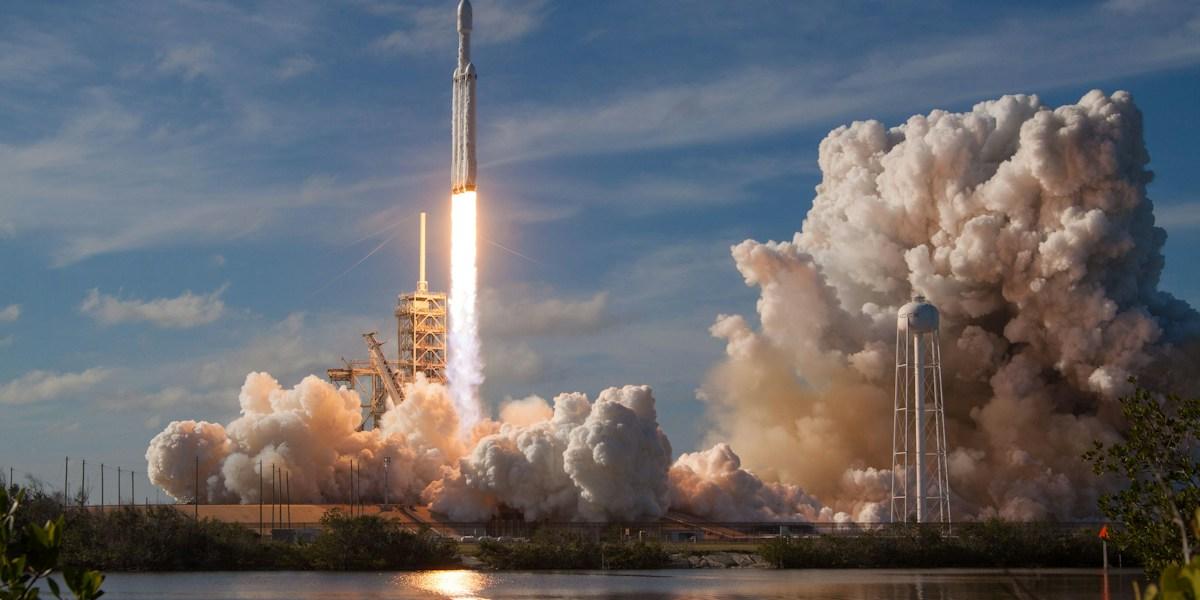
United Launch Alliance's failed Florida launch destroyed 40 Amazon Leo satellites, raising questions about launch reliability, deployment schedules and the competitive landscape of commercial space.
The failure of a United Launch Alliance Vulcan rocket during a mission from Florida on Sunday, November 15, resulted in the loss of 40 Amazon Leo satellites and introduced another significant challenge for the commercial space industry. The incident affected two major organizations pursuing different but interconnected objectives: ULA's effort to establish Vulcan as a dependable launch vehicle and Amazon's effort to expand its satellite-based internet network.
The rocket launched from Cape Canaveral Space Force Station carrying the Amazon Leo spacecraft. Approximately 10 minutes into the flight, the vehicle experienced an anomaly and failed to deliver its payload into the intended orbit. ULA confirmed the mission failure and stated that it would work with Amazon and relevant organizations to investigate the incident.
The failure represented the first complete launch failure in ULA's history, making the event particularly significant for the company's operational and commercial strategy.
A Setback for ULA's Launch Program
Vulcan was developed as a next-generation launch vehicle intended to support national security, government and commercial missions. Its development is particularly important because the United States relies on a relatively limited number of providers capable of carrying large and strategically important payloads into orbit.
ULA, a joint venture between Boeing and Lockheed Martin, developed Vulcan to replace its earlier Atlas V and Delta IV launch systems.
The rocket's successful introduction was intended to strengthen the company's position in a competitive market that includes SpaceX and other emerging launch providers.
Before the November 15 incident, Vulcan had completed four previous flights. The latest mission was its fifth flight and its first in approximately nine months, following earlier technical reviews involving components of the vehicle.
The anomaly therefore introduces additional operational uncertainty. ULA must determine what failed, identify whether the issue involves a particular component or broader system behavior, and establish what corrective measures are necessary before the vehicle returns to service.
The company had not identified the cause when it announced the failure.
Amazon's Satellite Expansion Faces Additional Pressure
The destroyed payload consisted of 40 Amazon Leo satellites intended to support the company's expanding low-Earth-orbit communications network.
Amazon's satellite initiative represents a major effort to enter the broadband market through a network designed to provide internet connectivity beyond the reach of conventional ground-based infrastructure.
The company has described a planned constellation involving thousands of satellites. Its deployment strategy depends on a sustained sequence of launches capable of placing large groups of spacecraft into orbit.
Losing 40 satellites does not eliminate the broader project, but it creates a setback involving hardware, launch planning and deployment schedules.
Amazon must also coordinate its satellite manufacturing, launch contracts, ground infrastructure and service development. A failed launch affects more than the immediate payload because replacement spacecraft and alternative launch arrangements require additional coordination.
The incident also highlights the importance of launch-provider diversification. Companies building large satellite networks must consider the operational risks associated with relying on individual launch systems.
Competition and Reliability in the Launch Market
The commercial launch industry has become increasingly important to telecommunications, defense, scientific research and global technology infrastructure.
Launch reliability remains one of the most significant factors influencing commercial decisions. A provider's ability to deliver payloads consistently affects customer confidence, scheduling flexibility and the financial planning of satellite operators.
SpaceX has established a substantial position through its reusable Falcon 9 system and growing launch operations. ULA occupies a different but important position, particularly in missions requiring specific launch capabilities and government-assured access to space.
Vulcan was developed partly to provide ULA with a modern system capable of competing in this environment.
The November failure therefore carries implications beyond one mission. It introduces questions about the timing of future flights, the availability of alternative launch capacity and the ability of satellite operators to manage schedule disruptions.
The impact will depend heavily on the investigation's findings and the corrective measures required.
The Importance of Technical Accountability
ULA stated that it would work closely with Amazon and other relevant organizations to determine the cause of the anomaly and establish the appropriate corrective actions.
The investigation is expected to examine available flight data and the vehicle's performance during the mission. Until that process produces reliable conclusions, assigning responsibility to a particular component or supplier would be premature.
Blue Origin, which supplies the BE-4 engines used by Vulcan, is among the organizations involved in the broader technical ecosystem surrounding the rocket. However, the available information did not establish that the engines caused the failure.
That distinction matters because commercial launch vehicles rely on multiple interconnected systems, including propulsion, guidance, communications, staging and payload deployment.
A Defining Moment for Commercial Space Strategy
The incident illustrates the operational complexity behind the rapid expansion of commercial space infrastructure. Satellite internet networks depend on reliable launch capacity, while launch providers depend on consistent technical performance to maintain customer confidence.
For ULA, the immediate priority is establishing the cause of the failure and demonstrating that corrective measures can restore confidence in Vulcan.
For Amazon, the challenge involves managing the loss of the satellites while maintaining its wider network deployment strategy.
The November 15 failure did not determine the future of either organization. It did, however, demonstrate how a single launch anomaly can affect multiple companies and expose the strategic dependencies connecting the commercial space industry.

Leadr Magazine Contributor
Abigail Rhodes
Covers entrepreneurship, innovation, and career development, sharing stories about ambitious professionals and growing businesses.
This article features partner, contributor, or branded content from a third party. Members of the Leadr Magazine editorial staff were not involved in the creation of this content. All views and opinions are those of the contributor alone.
Related Posts
American Businesses Face a New Consumer Reality as Inflation Drives a Historic Shift Toward Value Shopping CapeWeek Proposal Signals a New Strategy for U.S. Aerospace and Aviation Influence
 AmeriLife and Palantir Expand Enterprise AI Partnership to Transform Insurance and Retirement Distribution
More from Strategy
- American Businesses Face a New Consumer Reality as Inflation Drives a Historic Shift Toward Value Shopping
- CapeWeek Proposal Signals a New Strategy for U.S. Aerospace and Aviation Influence
- AmeriLife and Palantir Expand Enterprise AI Partnership to Transform Insurance and Retirement Distribution
- From Operator to Owner: The Next Chapter of Bostyn Group
- Faciem Valorem Corporation Builds Beyond Earth
- Sustainability as Strategy: How U.S. Companies Are Turning Green Practices into Business Value
- Navigating Mergers and Acquisitions in 2024: Strategic Insights for Business Leaders
- How to Build a Data-Driven Strategy: The Key to Success in 2024
- The Future of Remote Leadership: Strategies for Leading Virtual Teams in 2024
- Mastering Crisis Management: Strategic Approaches for Businesses in 2024