


 Vallejo Relief Center: Highway 80's Cultural Hub
Home»Strategy»Faciem Valorem Corporation Builds Beyond Earth
Faciem Valorem Corporation Builds Beyond Earth
An emerging innovation company connects ethical AI, agriculture, sustainability, space science, and human-centered progress.
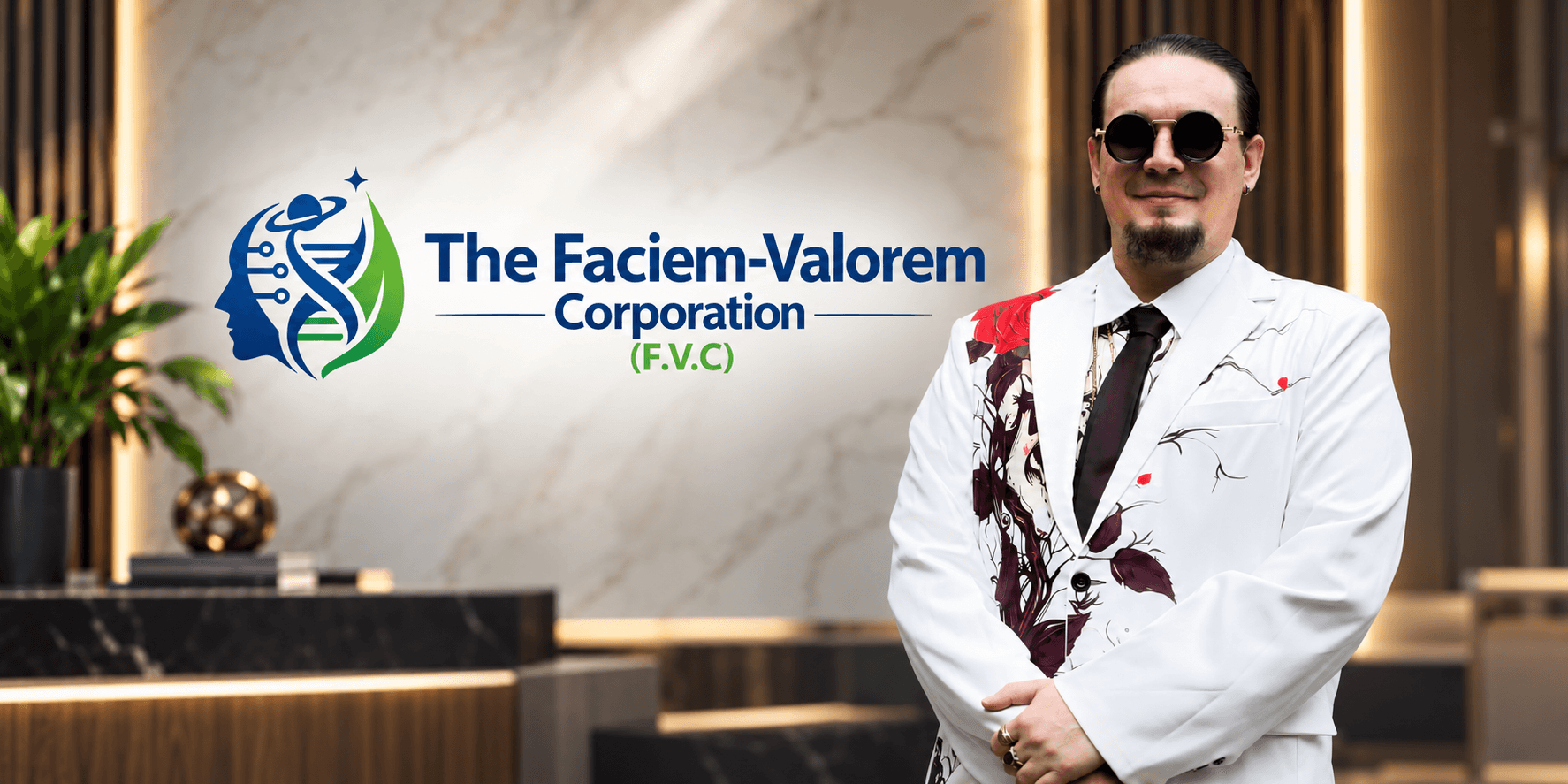
The question facing Faciem Valorem Corporation was never whether one idea could become a company. It was whether many ideas, each ambitious on its own, could be brought into one disciplined vision. Artificial intelligence, agricultural technology, clean energy, media, humanitarian work, and future space exploration often live in separate conversations. Founder Jaryd Bellas-Menzie saw a chance to connect them. Faciem Valorem Corporation, also known as FVC, is being built around that connection, with a mission to turn technology into practical value for businesses, communities, and long-term human progress.
Faciem Valorem Corporation Starts With Purpose
Faciem Valorem Corporation began with a broad but focused belief: innovation should serve more than novelty. It should help solve problems, create opportunity, and bring people together across industries that rarely share the same table. Rather than define itself by one product or category, FVC has developed as a multidisciplinary technology and innovation company exploring ethical AI, sustainable systems, software, agricultural technology, food security, clean energy, digital communications, and media.
That scope could easily become unfocused in less careful hands. For FVC, it is the point. The company’s work reflects the reality that modern challenges do not arrive in neat categories. Food security connects to agriculture, energy, data, climate resilience, logistics, education, and software. Space exploration connects to resource management, sustainability, robotics, waste reduction, and human survival in extreme environments. Media connects to awareness, trust, collaboration, and access. FVC is positioning itself where those intersections meet.
“We don’t see innovation as belonging to one industry. We see an opportunity to connect technology, agriculture, sustainability, science, and human development in ways that can create value both today and for the future.”
That philosophy is visible in the company’s developing ecosystem. FVC’s website describes a portfolio that includes software development, artificial intelligence solutions, consulting, internet solutions, and a growing list of in-house products and initiatives. Names such as NovaTerra Strategies, Valorem HR, Harvest Docket, Nexus Vox AI, Vibe369, and HiveGuard AI suggest a company thinking not only about tools, but about systems. Around those ventures, FVC is also building broader networks through The F.V.C. Alliance, The F.V.C. Academy, and philanthropic collaborations.
The company’s emphasis on ethical intelligence is central to its identity. In a business climate where AI often moves faster than public trust, FVC has made responsibility part of its brand language. Its stated interests include privacy, responsible use of technology, AI rights, human-centered software, and sustainable innovation. That does not mean the company presents simple answers to complex questions. Instead, it signals an intention to build with accountability in mind from the start.
Faciem Valorem Corporation Crosses Boundaries
What makes Faciem Valorem Corporation distinctive is not only the range of fields it touches, but the way it tries to make them speak to one another. FVC’s work sits at the intersection of ethical AI and agricultural technology, but it also reaches into scientific research, community development, education, media, and future space environments. That combination gives the company an unusual narrative: local in its concern for practical impact, but expansive in its view of what human-centered innovation can become.
Recognition through the Global Food Security Summit has helped validate part of that direction. FVC has received recognition connected to Ethical AI and AG Tech Reformer, placing the company’s work within a wider conversation about agriculture, technology, and food systems. For an emerging company, that recognition matters because it gives shape to an idea that might otherwise seem too broad. It shows that FVC is entering arenas where those connections are being examined, challenged, and advanced.
The company’s involvement in the Lunar Recycle Challenge and Plant the Moon and Plant Mars initiatives adds another layer to the story. Through those efforts, FVC developed its LWRRS concept, a Lunar Waste and Resource Recycling System designed around how waste in future lunar environments could be transformed into useful resources. If humanity is to live and work beyond Earth, waste can no longer be seen only as a disposal problem. It may become a resource challenge, an engineering challenge, and a sustainability challenge at once.
That space-focused work also mirrors problems on Earth. Resource scarcity, agricultural resilience, clean energy, circular systems, and responsible technology use are already urgent themes in business and public life. FVC’s approach suggests that concepts developed for extreme environments may also sharpen thinking about terrestrial systems. In that sense, the company’s interest in lunar and Martian sustainability is not a departure from its agricultural and humanitarian focus. It is an extension of it.
“Faciem Valorem Corporation is about more than building technology. It is about building connections between ideas, people, industries, and possibilities that might otherwise never meet.”
Those connections are also visible in FVC’s developing collaborations. The company has identified work with organizations such as Power From Within Clean Energy Society, DUBBY, Nu Atlantis, H.O.P.E. Foundation of Ecuador, Harbour of Hope Initiative Nigeria, Meta Church & Orphanage, and others. These relationships point toward a company that views innovation as both technical and social. Technology may provide the tool, but people, trust, access, and shared purpose give that tool relevance.
What Comes Next For Faciem Valorem Corporation
Faciem Valorem Corporation is still growing, and that matters to the integrity of its story. This is not a finished corporate legend presented after decades of scale. It is an active entrepreneurial build, with ideas moving through recognition, applications, partnerships, media development, and research pathways. The company has upcoming October nominations through the TELUS Stand with Owners competition, and it has submitted funding applications through NASA’s NSPIRES system, including an application under the M-STAR opportunity. A funding decision is expected October 4, 2026.
Those opportunities should be understood as pursuits, not completed outcomes. Their importance lies in what they reveal about FVC’s trajectory. The company is seeking pathways that place its work in front of serious innovation, research, and business networks. Visibility, evaluation, and collaboration are not side issues. They are how ambitious concepts become durable ventures.
Meanwhile, FVC is building its communications presence through FVC Radio, a media initiative designed to support conversations around entrepreneurship, innovation, information, and community engagement. If technology connects systems, media connects people. A platform such as FVC Radio can help the company share ideas, elevate conversations, and create a bridge between innovators, businesses, communities, and audiences who may benefit from seeing how these themes relate.
The company’s software and digital initiatives add further depth. By working on AI, internet solutions, business tools, and applied technology products, FVC is developing a practical commercial side to match its larger vision. Grand ideas need implementation. Ethical AI needs usable interfaces. Agricultural innovation needs data, workflows, and adoption. Sustainability needs systems that organizations can actually understand and use. FVC’s challenge, and its opportunity, is to turn its broad map into accessible solutions.
For Bellas-Menzie and FVC, the central story is persistence through complexity. The company is not asking the market to care about one isolated invention. It is inviting partners, collaborators, and observers to consider that the next generation of innovation may belong to organizations willing to cross the old boundaries between technology, agriculture, energy, media, science, and social impact. That is a difficult road, but a timely one.
“The future requires us to think beyond individual industries and individual problems. FVC’s goal is to explore what becomes possible when we start connecting those problems and solutions together.”
For businesses, collaborators, educators, innovators, and mission-aligned organizations seeking a partner at the edge of ethical AI, sustainability, and applied technology, Faciem Valorem Corporation offers more than a company profile. It offers a developing ecosystem. Those interested are welcome to explore its work, follow its updates, and consider where their own mission might connect with FVC’s growing vision for human-centered innovation.
Explore More About Faciem Valorem Corporation
Connect through the FVC Website, LinkedIn, Facebook, and Instagram.

Leadr Magazine Contributor
Abigail Rhodes
Covers entrepreneurship, innovation, and career development, sharing stories about ambitious professionals and growing businesses.
This article features partner, contributor, or branded content from a third party. Members of the Leadr Magazine editorial staff were not involved in the creation of this content. All views and opinions are those of the contributor alone.
Related Posts
Vallejo Relief Center: Highway 80's Cultural Hub Irix Makes Written Language Easier To Understand
 David Wortley Brings AI Warning To Oxford World Leaders