




 From Operator to Owner: The Next Chapter of Bostyn Group
Home»Strategy»Emerald AI Raises $150 Million to Turn Data Centers Into Flexible Powe…
Emerald AI Raises $150 Million to Turn Data Centers Into Flexible Power Assets
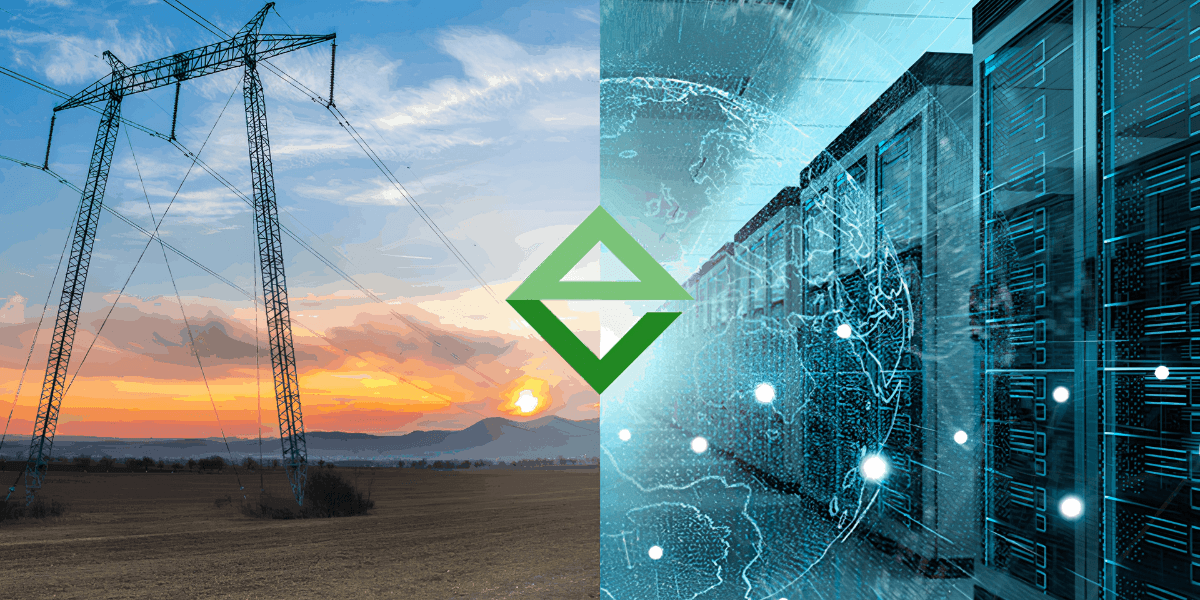
Emerald AI announced a $150 million Series A financing round Tuesday at a valuation of $1.05 billion, placing the company at the intersection of artificial intelligence, data-center infrastructure and the U.S. power grid.
The Washington, D.C.-based company is developing technology designed to allow AI data centers to adjust their electricity consumption in response to conditions on the power grid. Emerald AI said its approach could potentially unlock as much as 100 gigawatts of capacity on the existing U.S. grid for AI workloads.
The financing illustrates an emerging innovation challenge: AI requires enormous amounts of electricity, while the infrastructure supplying that power cannot necessarily expand at the same speed.
AI's power problem
The rapid growth of AI has created demand for increasingly large data centers.
Training and operating advanced AI systems requires powerful computing hardware, and that hardware consumes substantial amounts of electricity.
The challenge is particularly important because data centers typically operate as large and relatively continuous electricity consumers.
Traditional power infrastructure is designed around a combination of generation, transmission and demand patterns.
Large AI facilities introduce another variable: computing workloads can potentially be shifted in response to the availability of electricity.
Emerald AI is building technology around that concept.
Data centers as grid resources
Rather than treating a data center only as an electricity consumer, Emerald AI wants its technology to allow the facility to respond dynamically to power-grid conditions.
The company describes its systems as making data centers flexible grid assets.
When electricity is scarce or grid conditions become constrained, computing activity can potentially be reduced or shifted.
When power becomes more available, workloads can increase again.
That creates the possibility of using computing demand as another tool for balancing the electricity system.
The $150 million financing
Emerald AI's Series A was co-led by Energize Capital and DCVC.
The company said the financing included a broad group of financial and strategic investors, including 12 Fortune Global 500 companies.
The $150 million investment values the company at $1.05 billion.
The financing provides Emerald AI with capital to expand its technology and commercial deployments.
The company said its technology had already been demonstrated at full data-center scale across five global demonstrations.
Why the technology matters to AI companies
The electricity challenge could become one of the largest constraints on AI expansion.
Technology companies can purchase more chips and build more computing capacity, but additional computing facilities require additional power.
In some regions, electricity infrastructure may take years to expand.
That creates a potential mismatch between AI demand and grid development.
Flexible data-center operations could help reduce that mismatch by allowing computing workloads to respond to power availability.
The approach does not eliminate the need for new generation or transmission infrastructure.
Instead, it could make better use of capacity that already exists.
Implications for utilities
The technology could also create new opportunities for utilities.
Large data centers are typically considered major customers because of their electricity consumption.
If those facilities can adjust demand in response to grid conditions, utilities could potentially gain another tool for managing periods of high demand.
That could become increasingly important as electricity demand rises from AI, manufacturing, electric vehicles and other technologies.
Innovation moves beyond software
The Emerald AI financing also illustrates how the AI economy is expanding beyond models and applications.
The first wave of AI investment focused heavily on software and model development.
The next phase increasingly involves chips, data centers, cooling systems, electricity generation and grid management.
Companies working on these physical and infrastructure problems are becoming strategically important because they address constraints that software alone cannot solve.
A new role for computing infrastructure
The concept of flexible computing changes the way businesses can think about data centers.
Instead of requiring every AI workload to operate continuously at maximum capacity, certain tasks can potentially be scheduled around energy availability.
Some workloads are more time-sensitive than others.
A customer-facing AI service may require continuous processing, while training or other computational tasks may offer more flexibility.
That distinction can create opportunities for intelligent workload management.
Challenges remain
The technology also faces practical challenges.
Not every AI workload can be interrupted or delayed.
Data centers must maintain reliability, and operators cannot sacrifice performance simply to respond to temporary grid conditions.
The technology must therefore distinguish between workloads that can move and those that cannot.
It must also operate without compromising data-center reliability or customer commitments.
Why the financing matters
Emerald AI's $150 million financing is significant because it addresses one of the most consequential infrastructure challenges facing the AI industry.
AI companies need more computing capacity, but additional computing requires additional electricity.
Emerald AI's approach attempts to make computing demand more responsive to the power system.
For technology leaders, the development highlights an important shift in innovation.
The future of AI will depend not only on better algorithms and more capable models but also on solving physical infrastructure constraints.
The company’s billion-dollar valuation indicates that investors see significant commercial potential in technologies capable of connecting AI growth with the realities of the electricity grid.

Leadr Magazine Contributor
Abigail Rhodes
Covers entrepreneurship, innovation, and career development, sharing stories about ambitious professionals and growing businesses.
This article features partner, contributor, or branded content from a third party. Members of the Leadr Magazine editorial staff were not involved in the creation of this content. All views and opinions are those of the contributor alone.
Related Posts
From Operator to Owner: The Next Chapter of Bostyn Group Faciem Valorem Corporation Builds Beyond Earth
 How Campfire Company Rebuilds Teams In Nature