




 Irix Makes Written Language Easier To Understand
Home»GlobalTrends»Micron Raises AI Infrastructure Stakes With $250 Billion U.S. Investme…
Micron Raises AI Infrastructure Stakes With $250 Billion U.S. Investment Plan
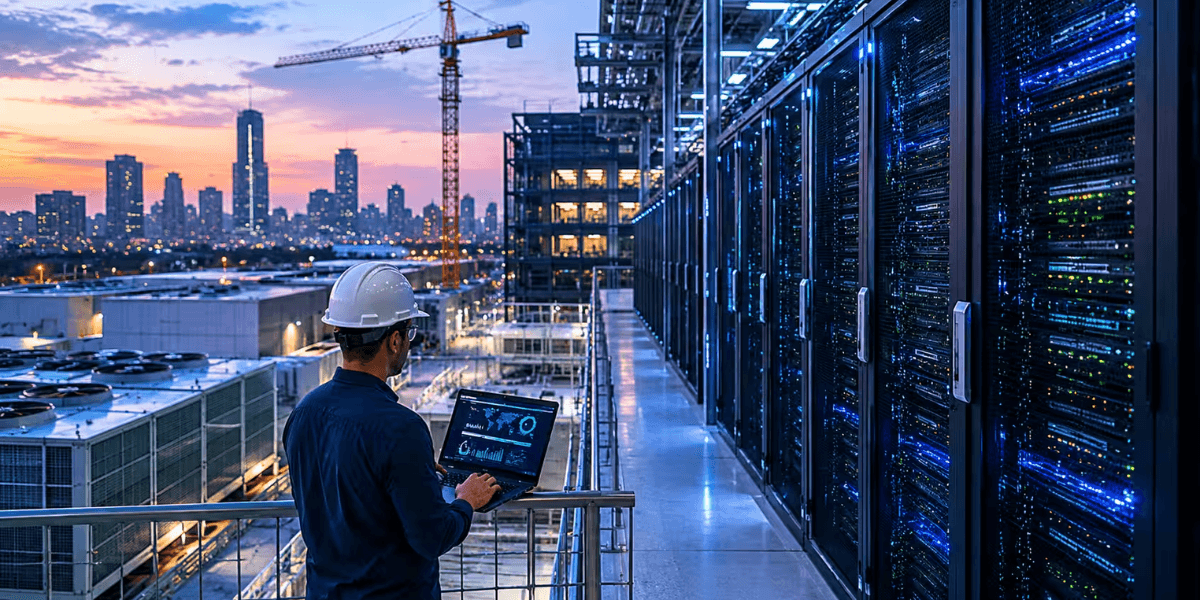
Micron’s $250 billion U.S. investment plan highlights surging AI memory demand and the infrastructure needed to support continued technological growth.
Micron Technology is expanding its investment in semiconductor manufacturing as demand for memory chips used in artificial intelligence infrastructure continues to accelerate, highlighting the scale of capital required to support the next stage of the AI economy.
The company projected first-quarter revenue of $61.5 billion, significantly above expectations, after reporting fourth-quarter revenue of $54.23 billion. Micron said demand for high-bandwidth memory used in AI data centers has surged, with orders exceeding its available capacity.
The company also said long-term supply agreements had increased to $32 billion from $22 billion in June, with many agreements backed by cash deposits. The development indicates that major technology companies and data-center operators are attempting to secure future supplies of memory components as AI infrastructure expands.
Micron's position is significant because high-bandwidth memory has become an essential component of advanced AI computing systems. AI accelerators require large amounts of fast memory to process the data needed to train and operate increasingly capable models.
The growing demand has transformed memory from a relatively specialized component of computing infrastructure into one of the key constraints on AI expansion. Micron reported that orders are currently exceeding its production capacity, prompting the company to accelerate investment in additional manufacturing capability.
Micron plans to invest more than $250 billion in U.S. facilities through 2035. The company is also planning new sites in Japan and additional investments designed to expand production capacity as demand continues to grow.
The scale of the investment illustrates how the AI boom is extending beyond companies that develop software and AI models. Semiconductor manufacturers, equipment suppliers, data-center operators, utilities and construction companies are all becoming part of the infrastructure supporting the technology.
For business leaders, the development highlights the importance of supply-chain capacity in AI strategy. Companies may have access to powerful AI models and applications, but those systems still depend on physical computing components that must be manufactured in sufficient quantities.
Micron expects supply-demand conditions for memory to remain tight into fiscal 2027 and 2028. The company has already secured most of its expected 2027 output through long-term agreements, providing customers with greater certainty about future supply while giving Micron visibility into demand.
The company's financial results also demonstrate how strongly AI infrastructure is affecting the semiconductor sector. Fourth-quarter revenue more than quadrupled from the previous year, while demand for high-bandwidth memory helped drive the company's expectations for another record year.
The investment cycle nevertheless carries substantial operational requirements. Semiconductor facilities require enormous amounts of capital, specialized equipment, skilled workers, energy and water. Building additional capacity therefore involves long planning periods rather than rapid increases in production.
Micron's U.S. expansion is part of a broader effort by semiconductor companies to increase domestic manufacturing capacity. The development of additional facilities can also affect regional economies by creating construction activity, manufacturing employment and demand for suppliers.
The AI industry's infrastructure requirements are becoming increasingly visible as companies commit larger amounts of capital to computing capacity. Nvidia, cloud providers and AI developers have all been investing heavily in data centers, while memory manufacturers such as Micron are expanding the component supply needed to operate those facilities.
For executives evaluating AI investments, Micron's results provide another indication that the technology's growth depends on a much broader industrial ecosystem. The competition is not limited to software capabilities; it also involves securing processors, memory, data-center capacity and other physical resources.
Micron's latest announcement therefore places semiconductor manufacturing at the center of the continuing AI expansion. Its planned investment demonstrates how the technology's growth is creating long-term demand for physical infrastructure and reshaping corporate capital spending across the technology sector.

Leadr Magazine Contributor
Ivan Petrosyan
Covers global markets and corporate finance, mapping the trends moving capital across borders.
This article features partner, contributor, or branded content from a third party. Members of the Leadr Magazine editorial staff were not involved in the creation of this content. All views and opinions are those of the contributor alone.
Related Posts
Irix Makes Written Language Easier To Understand Tony Vlahovic: One Dream, One Team, No Limits
 From Operator to Owner: The Next Chapter of Bostyn Group