



 Macy's Raises Full-Year Forecast as Premium Brands Drive Retail Growth
Home»Strategy»Leadership in the AI Era Means Building Confidence Before Chasing Scal…
Leadership in the AI Era Means Building Confidence Before Chasing Scale

As artificial intelligence continues reshaping the global economy, one of the defining leadership lessons emerging this year is that long-term success depends on disciplined execution as much as technological ambition. Recent developments across the technology sector demonstrate that organizations are increasingly being evaluated not only by how quickly they innovate, but by how effectively leaders balance investment, accountability, and sustainable growth.
The latest wave of AI-related announcements illustrates this shift. Governments and major corporations continue committing unprecedented resources to artificial intelligence infrastructure, cloud computing, advanced semiconductors, and digital transformation. South Korea, for example, unveiled a broad package of AI initiatives involving leading technology companies as part of a national effort to strengthen its position in the global AI economy.
While these announcements reflect growing confidence in AI’s long-term potential, they also reinforce a broader leadership challenge. Large-scale transformation requires more than financial investment. It demands strategic clarity, organizational alignment, and the ability to earn trust from employees, investors, customers, and regulators throughout periods of rapid change.
One of the clearest trends emerging in executive leadership is the growing importance of communicating purpose alongside performance. Organizations investing heavily in artificial intelligence are increasingly expected to explain how today’s spending supports tomorrow’s value creation. Stakeholders want more than ambitious roadmaps—they want measurable outcomes, responsible governance, and a realistic path toward sustainable growth.
That expectation is changing how leadership teams approach strategic planning. Rather than viewing AI solely as a technology initiative, executives are integrating it into broader business objectives involving customer experience, operational efficiency, workforce development, and competitive positioning. The result is a more holistic approach that connects innovation directly to organizational mission.
Another defining characteristic of effective leadership is adaptability. Artificial intelligence evolves far more rapidly than traditional business cycles, making static long-term plans increasingly difficult to maintain. Organizations that perform well tend to build decision-making processes capable of adjusting quickly as markets, customer expectations, and technological capabilities change.
Transparency has likewise become a strategic advantage. Recent market reactions to technology earnings have shown that investors increasingly distinguish between companies that simply increase spending and those that clearly explain why those investments matter. Executive teams that communicate openly about priorities, risks, timelines, and expected outcomes are often better positioned to maintain stakeholder confidence during periods of uncertainty.
Leadership also extends beyond financial performance. Artificial intelligence introduces important questions surrounding data governance, cybersecurity, ethical decision-making, and workforce transformation. Addressing these issues requires collaboration across technology, legal, finance, operations, and human resources rather than leaving responsibility solely with engineering teams.
For entrepreneurs, these developments offer valuable lessons regardless of company size. Startups may not invest billions of dollars in infrastructure, but they face many of the same strategic decisions regarding resource allocation, product development, hiring, and customer trust. Sustainable growth often depends less on moving first than on executing consistently and communicating clearly.
Workforce leadership is becoming equally important. Employees are increasingly looking to executives for guidance as AI changes daily workflows and professional expectations. Organizations that invest in training, encourage continuous learning, and explain how technology supports employees rather than simply replacing them are more likely to foster engagement and long-term resilience.
Another lesson emerging from this year’s business environment is that collaboration has become a competitive advantage. Partnerships between governments, universities, technology companies, and private enterprises are accelerating innovation while expanding access to talent and infrastructure. Leaders capable of building productive ecosystems rather than operating in isolation are often better positioned to navigate increasingly complex markets.
The current AI landscape also reminds executives that vision alone is insufficient. Ambitious goals must be supported by operational excellence, disciplined capital allocation, thoughtful governance, and effective communication. Organizations that successfully align these elements are better equipped to transform technological opportunity into lasting business performance.
As artificial intelligence continues influencing industries around the world, leadership is evolving alongside it. The executives who leave the greatest impact are unlikely to be remembered simply for adopting new technology first. They will be recognized for building organizations that embrace innovation responsibly, inspire confidence during uncertainty, and create sustainable value long after the initial excitement surrounding emerging technologies has passed.

Leadr Magazine Contributor
Abigail Rhodes
Covers entrepreneurship, innovation, and career development, sharing stories about ambitious professionals and growing businesses.
This article features partner, contributor, or branded content from a third party. Members of the Leadr Magazine editorial staff were not involved in the creation of this content. All views and opinions are those of the contributor alone.
Related Posts
Macy's Raises Full-Year Forecast as Premium Brands Drive Retail Growth Why Clarity Becomes Harder to Protect as Leadership Grows
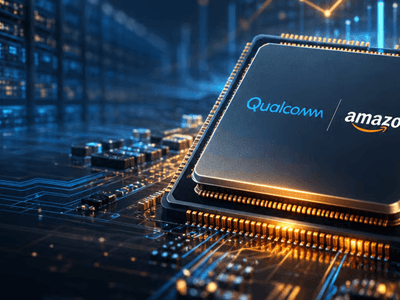
 Qualcomm and Amazon Expand AI Chip Partnership as Data Center Demand Grows