


By Scott E. Jones, BFA™, CPFA®, CRPC®, RFC®
Founder & Financial Advisor, Genesis Wealth Advisor Group
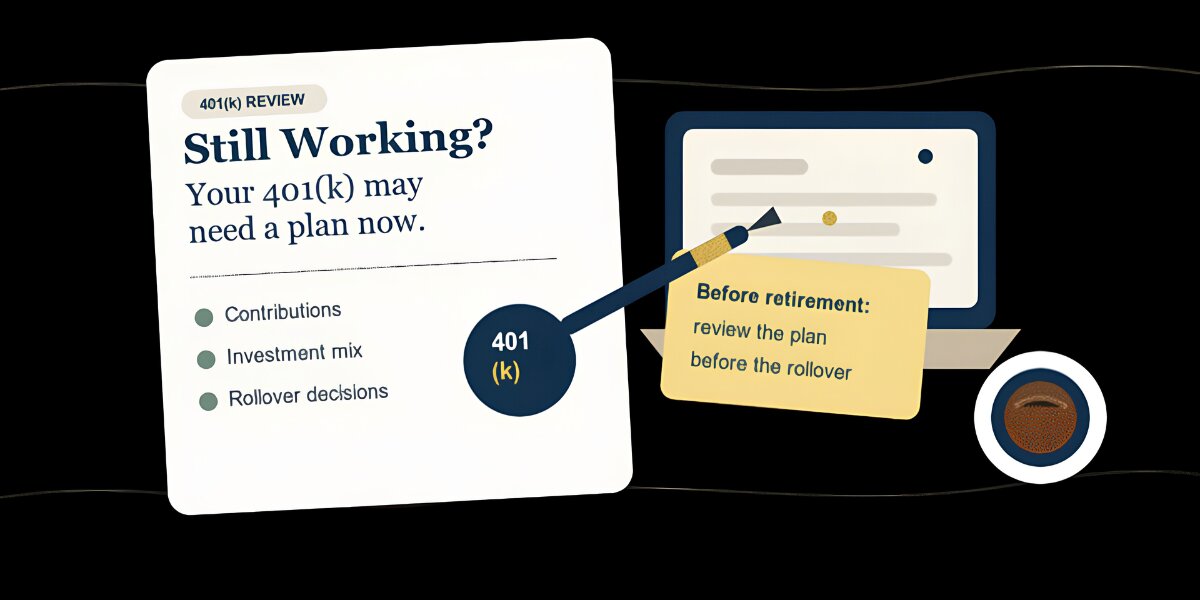
In some workplace plans, professional 401(k) guidance may help employees make better decisions before retirement or a rollover.
For many workers, the 401(k) is one of the largest assets they own.
And yet, many people treat it like something they are supposed to figure out alone.
They pick investments from a menu. They choose a contribution rate. They decide whether to use the target-date fund, the aggressive fund, the stable value option, or some mix of everything.
That may be fine for a while. But as the balance grows, the questions get bigger.
Am I taking too much risk? Am I not taking enough? Should I use Roth or pre-tax contributions? Am I saving enough? How does this 401(k) fit into my broader retirement plan?
Here is the part many employees do not realize: in some cases, they may be able to get professional help with a workplace 401(k) before they retire or roll the money over.
The 401(k) Advice Gap
The workplace 401(k) has become the primary retirement savings vehicle for millions of Americans. But that does not mean every participant feels confident managing it.
Schwab’s 2024 401(k) Participant Survey found that 61% of workers believed their financial situation warranted advice from a professional, up from 55% the previous year. The same survey found that workers were more confident making 401(k) investment decisions with help from a financial professional than making those decisions on their own.1
The average 401(k) participant is not simply choosing investments. They are making decisions that may affect taxes, retirement income, Social Security timing, market risk, beneficiary planning, and future cash flow.
Can an Advisor Actually Help With a 401(k) at Work?
In many situations, yes, but this is where the details matter.
Not every financial advisor can provide ongoing management or individualized advice on a participant’s active workplace 401(k). Some advisors may only be able to offer general education or suggest that the participant use the plan’s built-in resources. Others may have access to advisory platforms that can review or manage certain participant accounts when the plan, recordkeeper, and account access allow it.
That distinction is important. Providing management is different from simply giving casual guidance. The advisory firm or platform must be able to operate within the plan’s rules and accept the appropriate fiduciary responsibility for the participant account. The Department of Labor notes that retirement plan fiduciaries must act prudently and solely in the interest of participants and beneficiaries when exercising discretionary authority or providing investment advice for compensation.2
That means workers should not assume help is unavailable just because the money is still inside an employer plan. For many employees, a 401(k) review can be a practical first step.
Why Waiting Until Retirement May Be Too Late
Many people do not seek help until they are ready to retire, change jobs, or roll over the account. That is understandable, but it can be reactive.
By then, years of decisions have already been made: how much was contributed, how the account was invested, whether old 401(k)s were consolidated, and whether the plan was aligned with retirement income goals.
The better time to review a 401(k) is often while the employee is still working.
That is when there may still be time to review savings rates, rebalance where appropriate, coordinate outside accounts and prepare for the transition from accumulation to income.
Retirement planning should begin while the paycheck is still coming in.
What an Advisor May Review
A good 401(k) review is not just about picking funds.
It should look at the account as part of the full financial picture: contribution strategy, employer match opportunities, Roth versus pre-tax decisions, investment allocation, old retirement accounts, beneficiary designations, tax considerations, and retirement income goals.
Most importantly, the 401(k) should be connected to the question that eventually matters most:
How will this account help create income in retirement?
That is where retirement income planning becomes important.
The Bigger Issue: Coordination
The 401(k) is often treated as a stand-alone account.
It should not be.
A workplace retirement plan may connect to almost every part of a person’s financial life: taxes, cash flow, Social Security timing, investment risk, retirement income, beneficiary designations, insurance, and legacy goals.
This is why many families eventually need a broader financial planning process, not just a fund recommendation.
That coordination also matters when someone retires, changes jobs, or considers a rollover. A rollover may provide broader investment choices and easier coordination with other accounts, but staying in the plan may also have benefits, including institutional pricing, certain investment options, creditor protections, or plan-specific distribution rules.
For households with more complexity, the conversation may go further. Business owners, executives, high-income professionals, and families with multiple planning needs may benefit from a coordinated model that connects retirement, tax, estate, investment, and protection planning. That is the coordination Genesis Wealth Advisor Group emphasizes through its Genesis Premier Virtual Family Office™ approach.
The Bottom Line
Your 401(k) may be one of your most important retirement assets. It deserves more than default settings.
For many employees, the opportunity is getting advice while there is still time to adjust contributions, manage risk, coordinate taxes, and build a strategy. A 401(k) is not just a workplace benefit. It may be the foundation of a future retirement paycheck.
Scott E. Jones, BFA™, CPFA®, CRPC®, RFC® is the founder of Genesis Wealth Advisor Group, LLC, specializing in retirement income planning, 401(k) management, and wealth strategies for affluent and high-net-worth individuals. Learn more about Genesis Wealth.
Sources:
- Schwab 2024 401(k) Participant Survey, as reported by NAPA: “More Workers Are Demanding 401(k) Financial Advice: Here’s Why.”
- U.S. Department of Labor, Fiduciary Responsibilities.
Securities and investment advisory services offered through Osaic Wealth, Inc., member FINRA/SIPC. Osaic Wealth is separately owned, and other entities and/or marketing names, products, or services referenced are independent of Osaic Wealth.
