




 U.S. Rental Market Shows Signs of Stabilization as Rent Growth Returns in Multifamily Housing
Home»GlobalTrends»ASML Warns Chipmaking Equipment Supply Will Lag Demand as AI Infrastru…
ASML Warns Chipmaking Equipment Supply Will Lag Demand as AI Infrastructure Expands
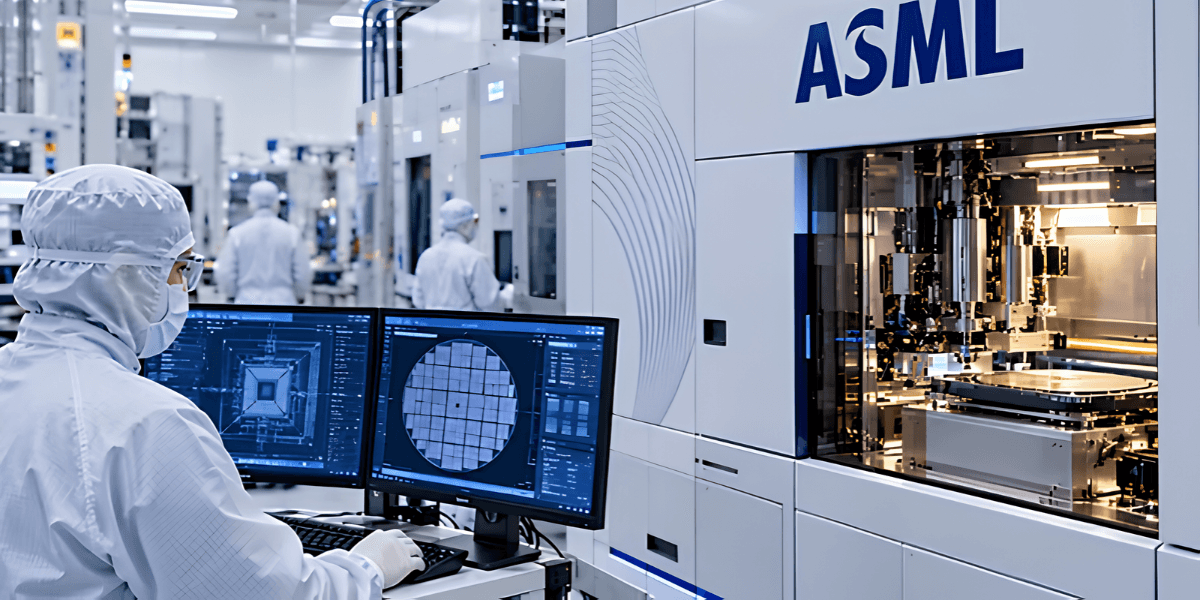
The semiconductor equipment manufacturer expects demand to exceed available supply in 2027 and 2028 despite plans to expand production capacity.
Semiconductor Equipment Becomes a Strategic Bottleneck
ASML warned that demand for its semiconductor manufacturing equipment is expected to exceed available supply in 2027 and 2028, highlighting a potential constraint for companies expanding production of advanced chips used in artificial intelligence and other computing applications.
The Dutch company, a major supplier of advanced lithography systems, said it planned to increase production capacity by approximately 30% over the period. Even with that expansion, expected demand was projected to outpace its ability to deliver equipment, according to an October 15 report by InformationWeek.
The development illustrates a critical feature of the AI economy: expanding computing capacity requires more than investment in data centers and software. It also depends on specialized machinery, manufacturing facilities, materials and skilled workers capable of producing advanced semiconductors.
For technology executives and policymakers, ASML’s warning highlights how constraints in one part of the supply chain can affect the growth plans of companies across the global technology industry.
Why Lithography Equipment Matters
Lithography is a central process in semiconductor manufacturing. It uses patterned light to help transfer intricate circuit designs onto silicon wafers, enabling the production of increasingly complex chips.
ASML supplies advanced extreme ultraviolet lithography systems, commonly known as EUV machines, which are used to manufacture some of the most advanced semiconductor products. These systems are highly complex industrial products that require extensive engineering, specialized components and precision manufacturing.
Because only a limited number of suppliers can produce equipment at this level of complexity, expanding manufacturing capacity is not as straightforward as increasing output in a conventional factory.
Production depends on intricate supply networks and the availability of components that may themselves require specialized manufacturing. Equipment also needs to be installed and integrated into semiconductor fabrication facilities before it can contribute to chip output.
Consequently, an increase in demand for AI processors does not automatically translate into an immediate increase in available chips. Equipment constraints can affect the timing and scale of capacity expansion.
AI Investment Is Increasing Pressure on Supply Chains
Demand for AI computing has encouraged technology companies to invest in data centers, processors and supporting infrastructure. Semiconductor manufacturers are responding to demand from cloud providers, AI developers and businesses deploying machine-learning systems.
The resulting investment creates pressure across multiple parts of the supply chain. Chipmakers need manufacturing equipment, data centers need processors and networking hardware, and operators must secure sufficient electricity and cooling capacity.
ASML’s warning highlights the difference between announcing new investment and bringing additional productive capacity online. Even when financing is available, specialized equipment may not arrive quickly enough to support the intended expansion schedule.
The consequences can extend beyond chip manufacturers. Cloud service providers depend on access to processors to expand computing services, while businesses adopting AI depend on the availability and cost of computing resources.
The precise effect will vary according to the type of chip, manufacturing process and capacity available to individual customers. Equipment constraints do not necessarily mean that every semiconductor product will become scarce, but they can complicate planning for advanced manufacturing.
Capacity Expansion Requires Long-Term Planning
ASML’s plan to increase capacity by around 30% reflects an effort to respond to expected demand. However, its warning indicates that additional production may still be insufficient to meet projected requirements during the period.
For semiconductor companies, that creates a planning challenge. Manufacturing facilities require substantial investment and long lead times, while demand for different chip categories can change as technology develops.
Companies must decide when to commit capital, how to allocate available equipment and which manufacturing processes should receive priority. These decisions can influence production costs and the pace at which new capacity becomes available.
Technology executives must also account for uncertainty. Demand forecasts can change, and a rapid expansion in one part of the industry may not produce equivalent growth across every product category.
The ability to secure equipment is therefore one consideration within a broader assessment of manufacturing capacity, customer commitments and capital expenditure.
Implications for the Global Technology Industry
The semiconductor industry is internationally interconnected, with equipment suppliers, chip designers, manufacturers and end users operating across multiple countries. A constraint at a specialized equipment supplier can affect investment plans far beyond the supplier’s home market.
For companies developing AI infrastructure, the warning reinforces the importance of supply-chain visibility and realistic deployment schedules. Infrastructure projects depend on multiple components arriving in sequence, and delays in one area can affect the overall timeline.
For business leaders, the broader lesson is that technological expansion depends on physical production systems as well as software innovation. AI development may attract attention because of new applications and capabilities, but the underlying hardware requires complex manufacturing processes and specialized industrial capacity.
ASML’s outlook does not establish that all planned AI investment will be delayed. It does indicate that equipment availability could remain a constraint even as suppliers expand production.
The company’s warning places semiconductor manufacturing capacity among the strategic issues that technology businesses must monitor as global demand for computing continues to develop.

Leadr Magazine Contributor
Ivan Petrosyan
Covers global markets and corporate finance, mapping the trends moving capital across borders.
This article features partner, contributor, or branded content from a third party. Members of the Leadr Magazine editorial staff were not involved in the creation of this content. All views and opinions are those of the contributor alone.
Related Posts
U.S. Rental Market Shows Signs of Stabilization as Rent Growth Returns in Multifamily Housing RoseMarie Keogh-Smyth Makes Money Human
 Brad Sugars: Transforming Entrepreneurship Through Proven Systems, Business Growth, and Financial Freedom