


Daniela Jines believes healthier organizations are not created by chance. They are intentionally designed to help people and performance grow together.
Looking Beyond Individual Performance
For years, organizations have invested heavily in helping employees perform better. They have introduced leadership training, wellness initiatives, productivity systems, and resilience programs, all with the goal of creating stronger, more effective teams.
While these efforts have value, Daniela Jines believes they often overlook a more important question.
What if the greatest opportunity for improvement is not changing people, but changing the environments where they work?
As an Organizational Happiness Strategist, Fulbright Scholar, researcher, author, and founder of Happy Organizations, Jines has spent more than two decades studying how workplace culture shapes both human well-being and organizational performance. Her research suggests that lasting change rarely begins with individuals alone. It begins with the systems that influence how people think, collaborate, communicate, and grow every day.
Two Decades of Global Learning
To better understand what allows organizations to thrive, Jines has traveled to more than 30 countries, working alongside business leaders, employees, educators, healthcare professionals, entrepreneurs, university researchers, Indigenous communities, and traditional knowledge keepers.
These experiences exposed her to different leadership models, cultural perspectives, and organizational practices. Although every workplace reflected its own unique context, she repeatedly encountered the same underlying truth.
People flourish when they feel respected, trusted, connected, and able to contribute with purpose.
Those qualities may seem simple, but they often become the strongest foundation for resilient organizations.
Workplace Culture Is Built Every Day
Many leaders view workplace culture as something that develops naturally over time.
Jines sees it differently.
Culture is shaped by everyday decisions. It grows through the conversations leaders have, the expectations they establish, the feedback they provide, and the psychological safety they create.
Small interactions accumulate into lasting organizational habits.
When leaders intentionally design these daily experiences, they influence far more than employee satisfaction. They shape innovation, collaboration, resilience, and long-term organizational success.
According to Jines, culture should never be treated as an afterthought. It is one of the most important systems an organization can build.

Bringing Science Into Leadership
Throughout her career, Jines has combined insights from neuroscience, organizational psychology, leadership research, and cross-cultural learning to better understand how people perform at their best.
Scientific research explains how stress affects decision-making, why trust strengthens collaboration, and how purpose influences motivation. Yet knowledge alone is not enough to transform organizations.
Leaders must also understand the human side of change.
This belief inspired Jines’ concept of Organizational Happiness as an Art, which recognizes that creating healthier workplaces requires both scientific understanding and intentional leadership.
While science provides evidence, leadership determines how that knowledge becomes part of everyday organizational life.
A More Sustainable Definition of Success
Organizations have traditionally measured success through productivity, financial growth, and operational efficiency.
Jines believes these outcomes remain essential, but they become more sustainable when organizations also invest in the people who create them.
Healthy workplace cultures encourage employees to contribute without sacrificing their health, relationships, or sense of purpose. They create environments where people are more willing to collaborate, innovate, and remain engaged over time.
Rather than viewing well-being as separate from business performance, Jines believes the two strengthen one another.
Organizations that care for people often build stronger organizations as a result.

Turning Research Into Practical Ideas
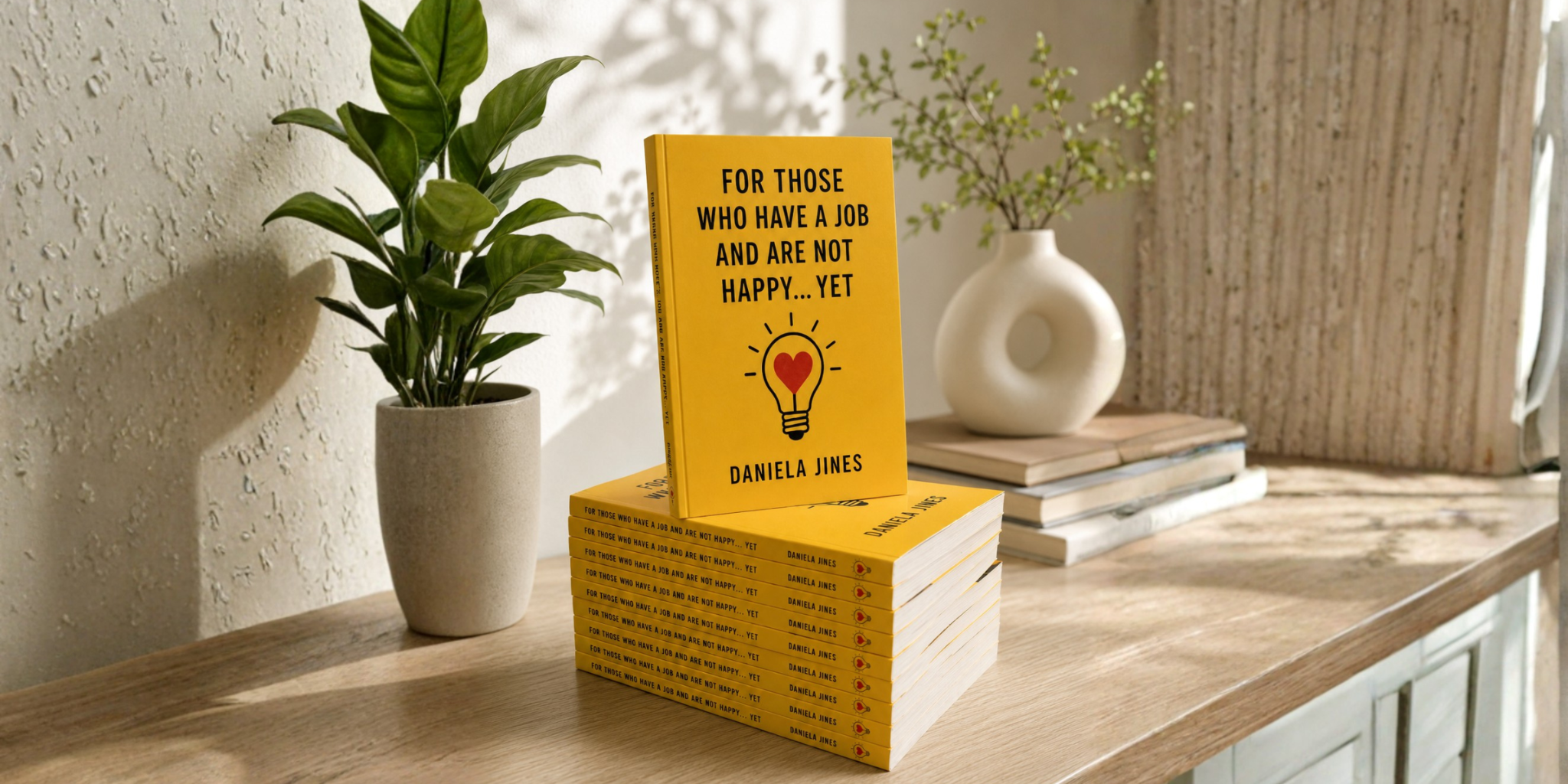
Years of international research eventually inspired Daniela Jines to write For Those Who Have a Job and Are Not Happy… Yet.
The book transforms decades of scientific research, consulting experience, and cross-cultural learning into practical guidance for leaders and employees seeking healthier ways to work together.
Its purpose is not simply to explain workplace challenges, but to demonstrate that organizations have the ability to intentionally create cultures where people flourish.
For Jines, the future of work will not be defined solely by advances in technology or new management trends.
It will be shaped by organizations that recognize human well-being as one of their greatest strategic strengths.
Explore Daniela Jines’ Work
To learn more about Daniela Jines and Happy Organizations, visit Daniela Jines . Happy Organizations Connect with her on LinkedIn and follow her on Instagram.
Readers interested in For Those Who Have a Job and Are Not Happy… Yet can find the book through Barnes & Noble.
