


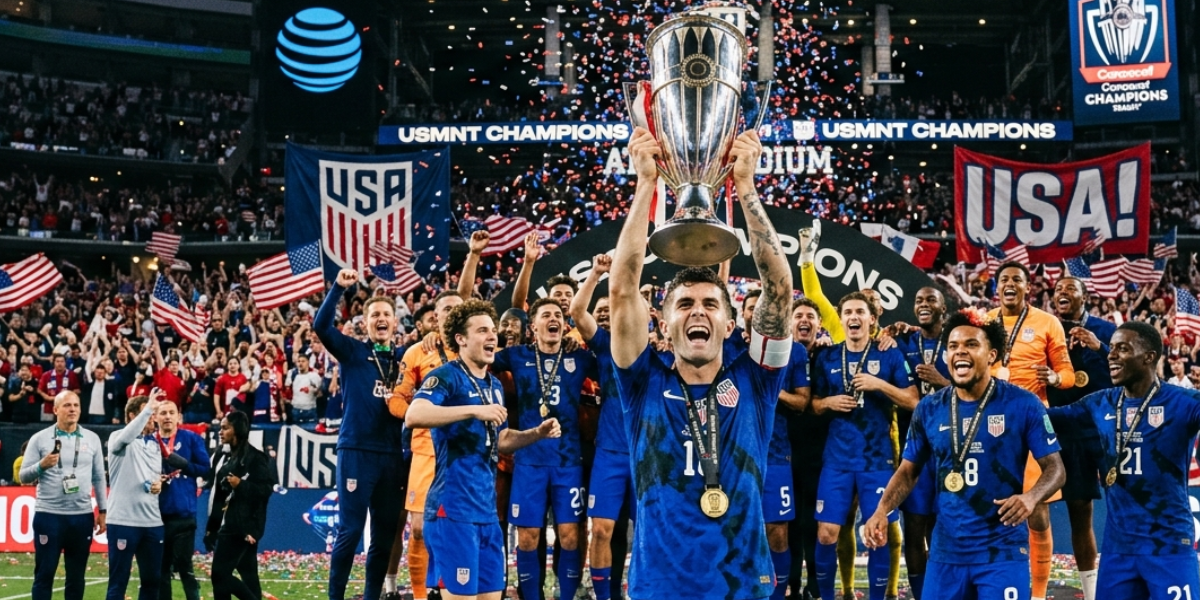
The United States Men’s National Team’s 3–2 victory over Senegal in Charlotte, North Carolina offered more than a successful result on the soccer field. The match served as a compelling example of leadership, adaptability, and strategic execution under pressure, qualities that resonate far beyond sports and into business, entrepreneurship, and organizational leadership.
As the United States prepares to co-host the 2026 FIFA World Cup, the match represented one of the team’s final opportunities to test itself against elite international competition. While sports fans focus on the scoreboard, leaders across industries can draw valuable lessons from how the team responded to adversity, managed momentum shifts, and maintained focus throughout a demanding contest.
The United States began the match with confidence and purpose. An early goal from Sergiño Dest reflected the team’s aggressive approach and willingness to seize opportunities. In leadership environments, strong starts can generate enthusiasm and momentum. However, experienced leaders understand that early success is only the beginning. Sustainable performance requires discipline, consistency, and the ability to adapt when circumstances change.
That challenge quickly emerged as Senegal responded with determination. Rather than allowing the match to become one-sided, the African football powerhouse applied pressure and tested the United States in multiple areas. This mirrors a common reality in business and leadership. Competitors respond, markets evolve, and unexpected obstacles often arise. Long-term success depends on an organization’s ability to adjust rather than rely solely on initial advantages.
One of the most notable leadership examples came from team captain Christian Pulisic. In addition to contributing a goal and an assist, Pulisic demonstrated how leadership is often expressed through action rather than words alone. Effective leaders inspire confidence by consistently performing when expectations are highest. His composure and influence helped stabilize the team during critical moments and reinforced trust among teammates.
Leadership credibility is built through performance. Teams are more likely to remain focused and committed when they see their leaders taking responsibility and delivering results. Whether in sports, business, or community organizations, leaders set the tone through their actions. Pulisic’s performance reflected the importance of leading by example during periods of pressure and uncertainty.
The match also highlighted the value of resilience. Senegal successfully erased the United States’ lead, exposing weaknesses and creating a challenging situation for the American squad. Many teams struggle after losing momentum, but the United States remained focused and continued executing its strategy. The eventual winning goal from Folarin Balogun demonstrated the importance of perseverance and the ability to respond effectively after setbacks.
For leaders, resilience is often one of the most valuable qualities they can cultivate. Organizations inevitably face disappointments, missed opportunities, and unexpected disruptions. The difference between success and failure frequently lies in how teams respond when things do not go according to plan. The United States’ ability to regain control of the match offers a practical example of maintaining confidence and composure in difficult circumstances.
Another important lesson from the match involves preparation. International friendly matches are designed not only to achieve positive results but also to identify strengths, weaknesses, and opportunities for improvement. Coaches use these contests to evaluate players, test strategies, and gather information before major competitions.
This approach closely resembles how effective organizations prepare for important initiatives. Successful leaders understand the value of testing ideas, evaluating performance, and making adjustments before major launches or strategic decisions. Preparation creates opportunities to learn in lower-risk environments before facing higher-stakes challenges.
Head coach Mauricio Pochettino utilized multiple substitutions during the match, providing opportunities for several players to contribute. This reflects another key leadership principle: talent development. Strong organizations invest in developing future leaders and ensuring that individuals gain experience before they are required to assume larger responsibilities.
By creating opportunities for emerging talent, leaders build stronger, more resilient teams. Succession planning and professional development are essential components of sustainable organizational success. The ability to trust multiple contributors rather than relying on a small group of individuals often strengthens long-term performance.
The match also demonstrated the importance of continuous improvement. Despite securing a victory, the United States coaching staff left with clear evidence of areas requiring attention. Defensive mistakes contributed to both Senegal goals, highlighting opportunities for growth even in a successful outcome.
Many organizations focus exclusively on results, but effective leaders evaluate both outcomes and processes. Positive results should not eliminate the need for honest assessment. Continuous improvement requires organizations to identify weaknesses, learn from mistakes, and refine their approach regardless of whether immediate objectives were achieved.
The broader significance of the match extends beyond soccer. With the World Cup approaching, expectations surrounding the national team continue to grow. The environment demands accountability, preparation, adaptability, and strong leadership at every level.
For entrepreneurs, executives, and professionals, the lessons are clear. Leadership requires adaptability in changing conditions. Trust is earned through consistent performance. Preparation remains essential even when progress is evident. Most importantly, setbacks should be viewed as opportunities to learn and improve rather than reasons to lose confidence.
While the match may ultimately be remembered as an important step in the United States’ World Cup preparations, its broader value lies in the leadership principles it demonstrated. The qualities displayed throughout the contest, resilience, accountability, preparation, and adaptability, remain fundamental to success in every field.
In the end, leadership is often revealed not when conditions are comfortable, but when pressure is at its highest. The United States’ performance against Senegal provided a timely reminder of that reality.
