


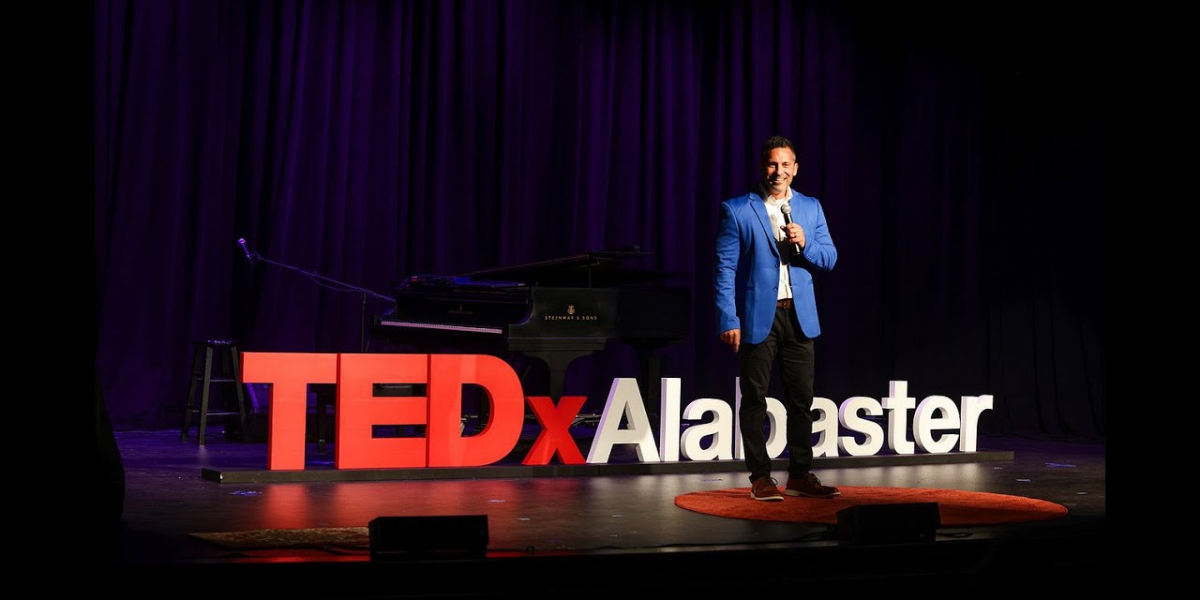
In his TEDxAlabaster talk, Brandon Matthews explores how AI can amplify our human qualities, urging us to focus on empathy, connection, and compassion in a tech-driven future.
In a world rapidly shaped by artificial intelligence (AI), many are wondering what it means to be human in a future where machines seem to be taking over. But for Brandon Matthews, founder of The Meaningful Marketplace, the question is not about whether AI will replace us, but rather how we can use AI to rediscover what makes us truly human. In his TEDxAlabaster talk, What Artificial Intelligence Can Teach Us About Being Better Humans, Matthews offers a refreshing perspective on AI’s role in our lives, and how it can help us reconnect with the very qualities that define humanity.
A Dream Realized: Brandon Matthews on the TEDx Stage
For many public speakers, being invited to present at a TEDx event is the pinnacle of their career. For Brandon Matthews, this moment was the culmination of years of work. After being selected from over 300 applicants, he stood on the iconic TEDxAlabaster stage, sharing his powerful message with an engaged global audience.
“To have the opportunity to step onto the TEDx stage and share my message is truly humbling,” says Matthews. “TED has a rich history of sparking meaningful conversations, and I’m honored to be part of that. It’s not just a personal achievement; it’s a chance to share a perspective I believe is critical for our future.”
In his talk, Matthews touches on a profound truth, that while AI is transforming the way we live and work, it’s our humanity, not our technology, that will ultimately define our future.
The Role of AI in Shaping Human Connection
Brandon Matthews’ TEDx talk explores how artificial intelligence, despite its growing presence, cannot replace the human qualities that make us who we are, qualities like empathy, emotional intelligence, and the ability to form meaningful connections. While AI can assist in automating tasks, solving problems, and advancing industries, it cannot replicate what makes us distinctly human.
“The smarter AI gets, the more essential our humanity becomes,” Matthews explains. “In an age where technology is progressing faster than ever, we must recognize that our unique human abilities, our empathy, compassion, and creativity, will always be the most powerful forces in the world.”
This powerful statement shifts the narrative about AI, urging the audience to reconsider how we view our relationship with technology. Instead of fearing that machines will take over, Matthews encourages us to embrace technology as a tool to amplify the human connection we so desperately need in an increasingly digital world.
AI and Compassion: How Technology Can Teach Us to Be Better Humans
In his talk, Matthews doesn’t just dive into the mechanics of AI or focus on its potential dangers. Instead, he shares how AI can actually teach us valuable lessons about what it means to be human, especially when it comes to compassion, connection, and the importance of being present.
One compelling example Matthews shares is a story about a life-saving medical situation where AI played a role, but it was human compassion that made all the difference. While AI could help detect a disease and provide a solution, it was the doctors’ empathy and care that gave the patient the will to fight and survive. This, Matthews emphasizes, is where the true power of humanity lies.
“AI can save lives, but it’s the human touch that makes the difference,” Matthews says. “It’s not about machines replacing us, it’s about learning how we can use technology to improve ourselves, our relationships, and our world.”
Matthews also brings humor and heart into his message, sharing a lighthearted personal anecdote about a childhood memory involving a competitive battle for a Nintendo 64. Through this story, he highlights that emotions like nostalgia, competition, and connection are uniquely human experiences that technology will never truly understand or replicate.
 Reframing the Future: Embracing Our Humanity in a Technological World
 Reframing the Future: Embracing Our Humanity in a Technological World
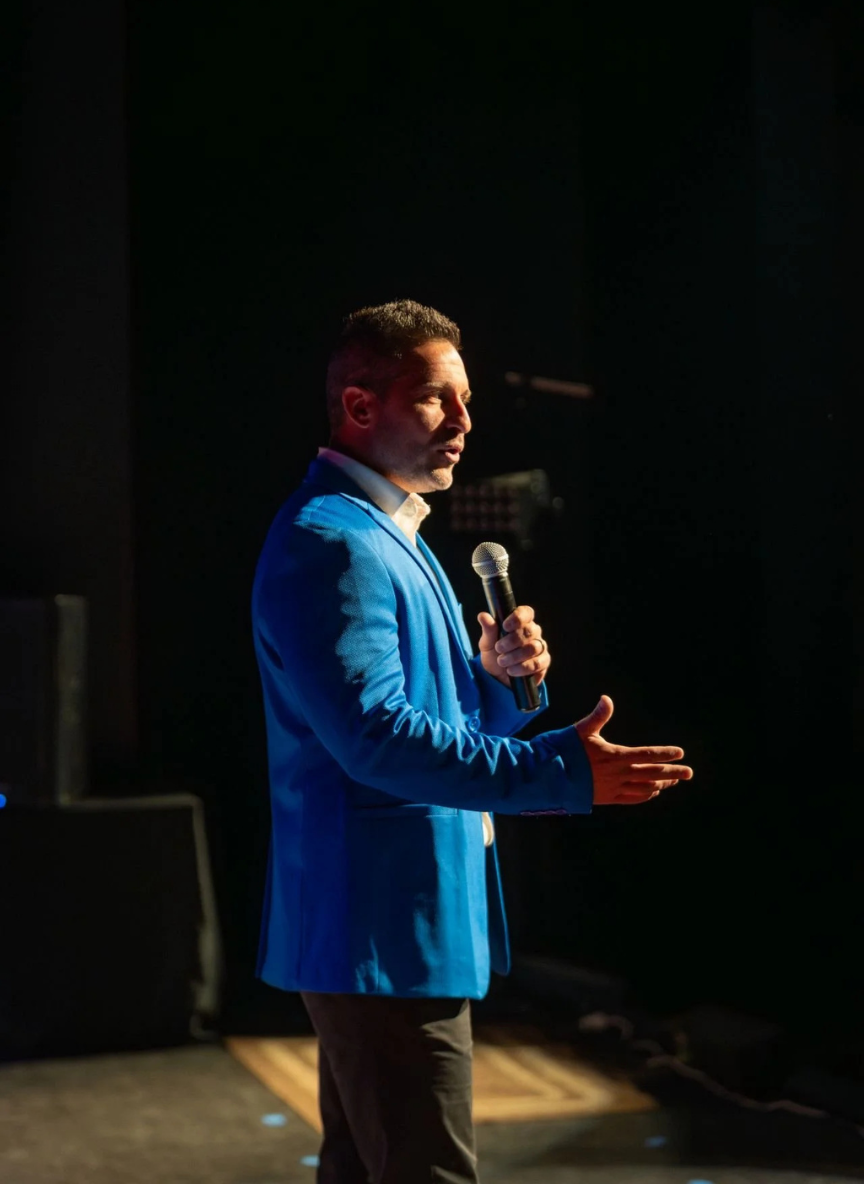
As Matthews reflects on the growing presence of AI in our daily lives, he urges us to view it not as a threat, but as a powerful complement to our own humanity. Rather than focusing on how machines might take over, Matthews emphasizes how AI can enhance our ability to connect with others, show compassion, and be present in the world.
“The future will not be defined by the machines that shape it, but by how we choose to show up as humans,” Matthews asserts. “AI is a tool, what matters is how we use it to become better people, more compassionate, more empathetic, and more connected.”
This thought-provoking perspective invites the audience to reconsider their approach to AI, viewing it as a means to enhance, rather than replace, human interaction. Matthews encourages us to harness the best of both worlds: the advancements of technology alongside the timeless qualities of humanity.
Watch the Full TEDx Talk
Brandon Matthews’ TEDxAlabaster talk offers an insightful, optimistic look at the intersection of AI and humanity. If you’re curious about how technology can teach us to be better humans and how we can redefine our relationship with machines, watch the full TEDx talk here:
Watch Brandon Matthews’ TEDx Talk: “What AI Can Teach You About Being a Better Human”
Brandon Matthews’ TEDx talk challenges us to reconsider what it means to be human in a rapidly evolving world. By exploring the intersection of AI and compassion, he encourages us to look beyond the machines and focus on the core human qualities that will guide our future. As we continue to innovate and embrace technology, Matthews offers a powerful reminder that it is empathy, connection, and compassion that will ultimately shape the world we live in.
To stay connected with Brandon Matthews and learn more about his work, visit Brandon Matthews’ Website or follow him on social media:
As AI continues to change the world, let’s embrace our shared humanity as the driving force behind a more compassionate and connected future.
